
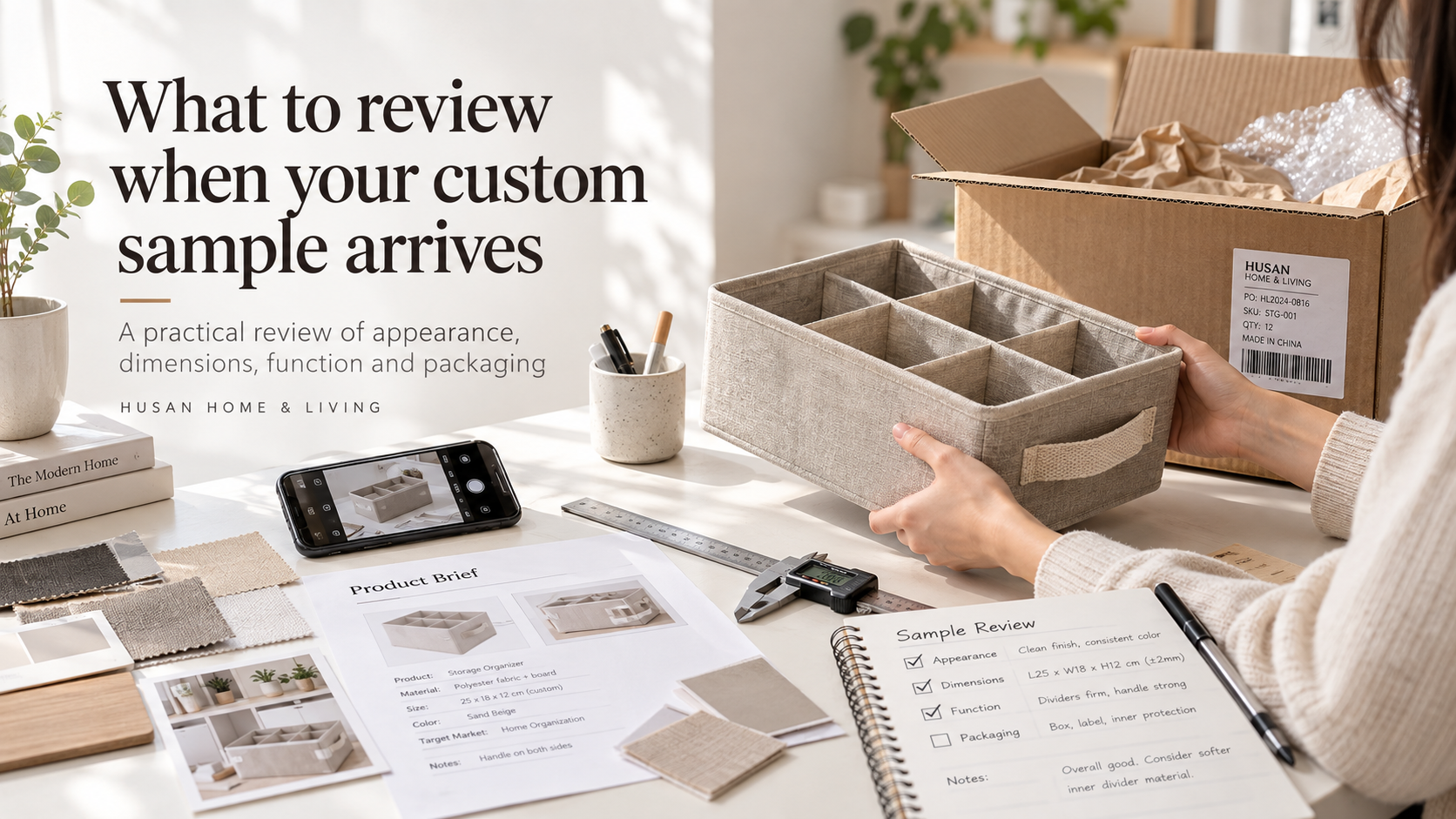
A custom sample gives you something tangible to compare with your original brief. The useful question is not simply whether you like it, but whether it matches the details your customers and business need.
Keep the agreed brief beside the sample
Use the same reference photographs, dimensions, materials and finish requirements shared during development. Give each sample a reference and record the version you received. This makes later feedback easier to trace.
Check appearance and dimensions
Review colour, surface finish, visible edges, assembly and branding where relevant. Measure the dimensions that matter to fit or use. Photograph observations clearly and include a scale where a size difference is important.
Try the intended everyday function
Describe the use you want to assess and the conditions of that assessment. For example, a storage item may need to fit a particular shelf, while a cleaning tool may need to reach a particular gap. A simple hands-on review is not a substitute for specialist testing or product certification.
Review packaging as part of the product
Check the information shown, how the product is protected, and whether the pack suits your shop. Confirm any barcode, language, label and carton requirements separately. Do not assume that a sample pack is the agreed production pack.
Give specific feedback
Separate accepted details from changes requested. Use numbered photographs or a short list so that each point can be answered. Ask whether a revised sample is needed and confirm any development charges and timing before proceeding.
Husan accepts custom sample requests and supports evaluation against an agreed brief. Audit scope, specialist testing and production requirements should be discussed for the particular product.