
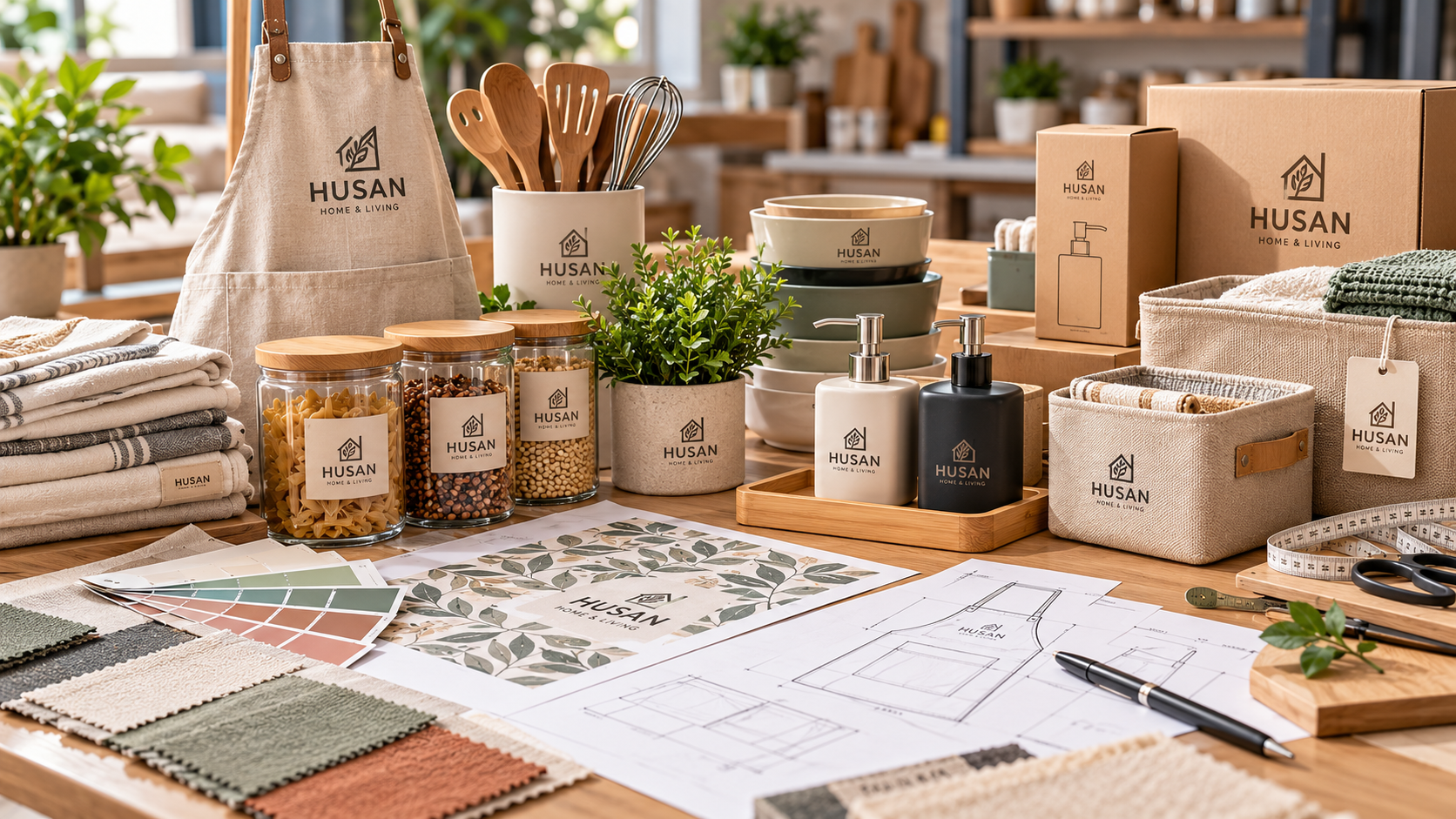
A distinctive Home & Living range begins with the customer you want to serve. For independent retailers and small wholesalers, custom branding can help connect useful everyday products with a recognisable shop identity. The most valuable first step is agreeing what the product must do, how it should look and how you will evaluate the sample.
A 2026 theme: everyday function with personal character
HKTDC's sourcing commentary on home hospitality highlights interest in kitchen and tabletop products that combine practical performance with lifestyle design. For a small retailer, our interpretation is to translate that theme into a focused brief: a particular colour, texture, print or presentation that fits your customers, rather than copying a trend wholesale. Read HKTDC's home hospitality analysis.
For example, an apron could be evaluated for fabric feel, pocket placement and fit before discussing a shop logo or distinctive print. This is an illustrative development idea, not a confirmed custom product offer.
Choose the level of customisation
Custom branding can mean several different things:
- Adding an agreed logo or label to a suitable existing product.
- Developing packaging, an insert or a retail sleeve.
- Requesting a different print, colour, material or dimension.
- Developing a new design that requires additional sampling or tooling.
Feasibility, costs, minimum quantities and lead times must be confirmed for each product and supplier. A low MOQ for a standard item does not automatically apply to a customised version.
Give the China supply chain a clear brief
Send your reference images, intended use, destination market, preferred materials, dimensions, artwork and expected quantities. Include the price positioning and sales channel: a neighbourhood variety store may need a different presentation from an online gift retailer.
Ask for the product, branding, sample, packaging and shipping assumptions to be separated in the quotation. This makes alternatives easier to compare and helps avoid choosing on unit price alone.
Evaluate the sample against the brief
Review the physical sample in the way a customer will use it. Keep a written checklist covering:
- Appearance: colour, finish, print clarity and logo position.
- Dimensions and materials: measured size, feel and agreed construction.
- Function: stability, fit, closures, handles or other relevant features.
- Brand presentation: readable artwork and consistent placement.
- Packaging: protection, presentation and the agreed product information.
- Repeatability: which details must remain consistent in later production.
Record photos, measurements and requested changes. If a key detail changes, review the revised sample before approval. Keep an agreed reference sample and written specifications for the production discussion. Sample approval provides a reference; it does not replace checks on the production order.
Move from approval to a practical wholesale order
Confirm quantities by item and variant, the agreed specifications, production timing, packing details and the shipping scope. Discuss inspection and any product-specific documentation requirements before committing to production.
Mixed-product orders should follow your chosen assortment. Husan can help coordinate sourcing, factory audits, custom samples, evaluation, consolidation and door-to-door transport, with the scope confirmed for your order. We can also look for products that do not appear in our current collection.
Bring us your idea
You do not need a complete product range to start. A reference photo, a clear customer need and a realistic first-order brief can begin the conversation.
Discuss custom branding and samples with Husan or send your brief. For a sample review checklist, read what to review when your custom sample arrives.
Small MOQ · Mixed Products · Consolidated Shipping